Hey folks, let’s cut to the chase. If you’re a workshop owner, mechanic, electrician, or someone who runs a space that needs reliable power for big tools, you’ve probably stared at that Trolley Heavy-Duty Power Station 4000W–5000W sitting on your inventory shelf and thought: “Wait, can this thing actually work for my shop?” Spoiler: it’s not just a yes or no question. Let me break this down like I would when I’m on a call with a customer panicking about a mid-job power outage, or a newbie who’s never had to size a power station before. Trolley Heavy-Duty Power Stations 4000W–5000W

First off, let’s get the basics out of the way. A workshop’s power needs aren’t the same as charging your phone or running a mini fridge in your garage. You’re talking about tools that pull way more juice than your average home appliance—think angle grinders, welders, air compressors, saws, even plasma cutters. The 4000W to 5000W range? That’s the sweet spot for most small to mid-sized workshops, but only if you use it right. I’ve been selling these bad boys for a few years now, and I’ve seen people mess this up way more than I’ve seen them nail it.
Let’s start with what these power stations actually do. Trolley-mounted models mean they’re not a bulky, permanent generator bolted to the wall—you can roll ‘em right to where you need power, no extensions strung across the whole shop floor that are a tripping hazard or lose voltage the longer they get. That mobility is huge for workshops, honestly. How many times have you had to drag an air hose 50 feet just because your outlet is on the other side of the bay? No more of that.
Now, power draw. Let’s do the math here, super simple. If you have a tool that’s rated at, say, 1500W, and another at 1200W, that’s 2700W total. Add in a drill at 700W, and you’re at 3400W. Leave 10-15% for startup spikes—because power tools don’t just flip on at their running wattage; they pull extra juice to kick on, especially inductive tools like motors for compressors or saws. That’s where the 4000W minimum kicks in. If you only had a 3000W station, that startup spike would blow the breaker, no question.
Wait, but what about bigger tools? I get it—some guys have 220V welders that pull 3000W on their own. Let’s check: a typical 200A MIG welder runs around 2400W at peak, so a 4500W station would handle that easily, even with a little extra for startup. What about plasma cutters? A 40A plasma cutter is about 2800W, again, right in that 4000W–5000W range. I had a customer last month who runs a body shop with a 5000W station, and he runs his welder, his paint sprayer, and a random space heater for his workbench all at the same time. No issues—he just makes sure he’s not running his table saw at the same time as the big compressor, and that’s it.
But hold up—this isn’t a one-size-fits-all. Let’s talk about the “heavy-duty” part, because that’s what makes these different from the cheap 1000W stations you see at the hardware store. Our 4000W–5000W models have pure sine wave inverters, right? That’s non-negotiable for workshop tools. Cheap modified sine wave inverters will make your power tools run rough, blow out their motors faster, or even mess up digital tools like laser cutters or battery chargers. I’ve seen a guy fry a $200 battery charger because he used the wrong inverter—saved him the hassle now, that’s why I always mention pure sine wave when selling these. That’s a big reason why these trolley stations work so well in workshops; they’re built for tools, not just camping.
Another thing: run time. Workshops don’t just need a quick burst of power—you might be running tools for hours at a time. Our 4000W model has a 120Ah lithium battery, and at 50% load, that’s like 8 hours of run time. The 5000W has a bigger 150Ah battery, so even more. Compare that to a gas generator that you have to refuel every 2 hours, or a permanent hookup that only works if the grid doesn’t go out. For workshops that work off-grid, or have old wiring that can’t handle the load, these are way better. I had a customer whose shop is in a rural area, and the grid goes out once a week in winter. His 4000W station runs his heat, his lights, and his tools for the whole day until the grid comes back. No more rescheduling jobs, that’s a game-changer.
Wait, but what about limitations? I don’t want to oversell this, because if you’re running a 6000W 3-phase welder, this isn’t going to cut it. But most small to mid-sized workshops don’t run those big industrial tools. If you’re a one-man shop fixing cars, doing woodworking, metal fabrication, general repairs—this range is perfect. I’ve had guys with 1-bay shops, 2-bay shops, even small fabrication warehouses, all using these with zero issues. The key is knowing your total peak load. Let’s say you add up all your tools’ running wattage, add 15% for startup, and that number is under 5000W. You’re good to go. If it’s over, you can always get the bigger 6000W model, but that’s outside our current range.
Also, the trolley design—let’s not sleep on that. Workshops have concrete floors, maybe some uneven spots, ladders to move around, tight bays. These are on big wheels, some with handles you can pull or push, even foldable ones so you can store ‘em in a corner when you’re done. No more carrying a 50lb generator across the shop. I’ve had customers tell me they roll it right to their lift, plug in the spot welder, and get the job done without dragging cords. That mobility is worth the price alone, in my book.
Now, let’s talk about common mistakes people make. First, they underestimate startup spikes. I can’t tell you how many times someone comes to me saying “my 4000W station won’t run my compressor” only to realize they added up running watts instead of peak. A 2HP air compressor pulls 3000W running, but 6000W at startup. Whoops. So that’s why we always tell people: add 20% to your total load, not 10. That buffer keeps you from tripping the internal breaker, which would shut you down mid-job.
Second, they use extension cords that are too thin. If you’re running a 100ft cord, you need a 12-gauge cord at minimum, not the thin 16-gauge you get for Christmas lights. Thin cords cause voltage drop, which makes tools run slower, use more power, and can even damage the power station’s inverter. I always give customers a free 25ft 12-gauge cord with their first order, just to avoid that mistake.
Third, they overload the station with random stuff. Like, don’t plug in a space heater, a microwave, and three tools all at the same time if you don’t have to. Yeah, the 5000W can handle it, but why push it? It’s better to spread out the load so the station doesn’t have to work that hard, which makes it last longer. We sell these with 2-year warranties, but I always tell customers not to abuse the warranty by running it way over its rated load every day.
Wait, let’s throw in a real example to make this concrete. Let’s say you’re a small auto shop, 1 bay, you have:
- 1/2” drill: 700W
- Angle grinder: 1200W
- MIG welder (150A): 2200W
- Air compressor (1HP): 1500W
- Shop lights: 500W
Total running wattage: 700+1200+2200+1500+500 = 6100W. Wait, hold on—if you run all of these at once, that’s too much, right? But no one runs all of these at the same time. When you’re welding, you’re not grinding, and when you’re using the compressor, you might not be drilling. Let’s say your total concurrent load is 2200 (welder) + 1200 (grinder) = 3400W, plus 500 (lights) = 3900W. That’s just under 4000W, and with startup spikes, that’s 4500W, which is perfect for the 4500W model. That’s exactly the use case these are built for.
Another example: a woodworking shop. You have a table saw (1800W), a circular saw (1200W), a planer (1500W), lights (500W). Concurrent load when running the table saw and planer: 3300W, plus spikes to 4000W—again, right in the range. No issues.
Now, what about noise? A lot of people think generators are super loud, but these are electric-powered, not gas. Wait, no—wait, the power stations we’re talking about are battery-powered, right? No engine, so they’re way quieter than gas generators. I’ve had customers say they can talk while running tools, no yelling over the noise. That’s a huge plus if your workshop is near a residential area, or you don’t want to deal with the fumes from gas generators. No exhaust, no fuel to buy, just plug in and go. That’s a big selling point I always highlight.
Wait, let’s address the elephant in the room: cost. These aren’t cheap, but they’re way cheaper than a permanent generator hookup, or replacing tools that got fried from a bad inverter, or losing a job because the power went out. I’ve had customers tell me they saved $1500 in repair costs in the first year alone, because their tools weren’t getting damaged by cheap power. And if you compare it to a gas generator that needs regular oil changes, fuel filters, and maintenance, these are basically plug-and-play—just charge ‘em up when you’re not using ‘em. Our lithium batteries last 5-7 years, so that’s a solid investment for a workshop that’s up and running every day.
So, to circle back to the original question: Can Trolley Heavy-Duty Power Stations 4000W–5000W be used in a workshop? The answer is a resounding yes—for most small to mid-sized shops. The key is sizing it right, not overloading it, and making sure you’re running pure sine wave compatible tools. I’ve seen these work for everything from a one-man repair shop to a small fabrication crew, and I’ve yet to get a complaint from a customer who uses it as intended.
But wait, if you’re not sure what size you need, or you have a weird mix of tools, just reach out. No hard sell, no pressure, just straight up advice. I’ve worked with guys who have a single 3000W welder and thought they needed a 5000W station, and guys who have 5 tools and thought they needed a bigger one. I can help you calculate exactly what you need, no guesswork.
If you’re tired of mid-job power outages, tripping breakers, dragging extension cords across your shop, or dealing with loud, smelly gas generators, these stations are made for you. They’re mobile, reliable, built for heavy-duty tools, and perfect for workshops that need power on the go.
Don’t waste time with cheap, flimsy power stations that’ll quit on you after a month. These are built to handle the daily grind of a workshop, so you can focus on getting jobs done, not fixing your power supply.
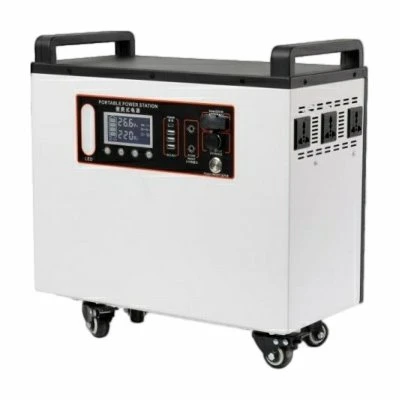
If you’re ready to chat about which model fits your shop, or you have questions about load, run time, or anything else, just reach out. We’re here to help you get the right power station for your needs, no fluff, no BS.
Medium Portable Power Stations 1000W–2000W References:
- Occupational Safety and Health Administration (OSHA). (2022). Portable Generator and Inverter Safety for Workshops. U.S. Department of Labor.
- Electrical Construction & Maintenance. (2023). Sizing Power Inverters for Inductive Tools in Commercial Workspaces. Endeavor Business Media.
- International Electrotechnical Commission (IEC). (2021). Standard for Pure Sine Wave Inverters Used in Industrial Power Equipment. IEC 61683:2021.
- Battery University. (2022). Lithium-Ion Battery Performance for Heavy-Duty Power Applications. Cadex Electronics Inc.
- Small Business Administration (SBA). (2023). Energy Solutions for Small Workshops. U.S. Small Business Administration.
Guangdong Joinwin Global Digital Intelligence Technology Co., Ltd.
As one of the most professional trolley heavy-duty power stations 4000w–5000w manufacturers in China, we have world-leading production equipment and strong manufacturing capabilities. Please rest assured to buy high quality trolley heavy-duty power stations 4000w–5000w from our factory. Customized orders are welcome.
Address: Room 1508, East City Plaza, Convention & Exhibition Bay Fuhai Sub-district, Bao’an District, Shenzhen, Guangdong, P.R. China
E-mail: bruceyang@joinwinenergy.com
WebSite: https://www.joinwinpower.com/
