Alright, let’s cut to the chase here: If you’re a gamer who’s ever been mid-battle on your console when the lights cut out, or you’re planning a gaming getaway to a cabin with no grid access, you’ve probably wondered—can a portable power station actually keep that console running? Spoiler: It’s not a straight yes/no, and as someone who sells these bad boys, I’m gonna break this down like I’m troubleshooting a laggy co-op game, no fancy jargon just real, usable info. Portable Power Stations

First, let’s talk what a portable power station (PPS) is versus what it isn’t. I see so many gamers scrolling Amazon and grabbing the cheapest 500Wh unit because it says “powers devices” — but 500Wh is like the gas tank of a tiny motorcycle, right? Your Xbox Series X, for example, sucks way more juice than a phone. Let’s do the math quick, no calculus required. I test every unit we sell in our warehouse, so I’ve got hard numbers: Xbox Series X (disc drive on, 4K gameplay) pulls ~180 watts at peak. PlayStation 5 Digital Edition hits ~150 watts, while a Switch docked in TV mode is around 15 watts (that’s a nightlight level, by the way). Wait, hold up—wait a second, people forget the accessories. Your TV pulls another 100-150 watts, a gaming headset’s a few watts, maybe a portable fan if you’re gaming in a hot room. So before you panic, let’s add that up: Series X + 4K TV = ~280 watts minimum, PS5 + 55-inch LED = ~250 watts. That’s just the immediate draw, not how long it’ll last.
Now, here’s the big question: Will the inverter on your portable power station handle that? Oh, right—most PPS have inverters, which is the part that converts DC battery power to AC for your console. There are two types: modified sine wave and pure sine wave. Modified is cheap, but it’s garbage for electronics with sensitive components like gaming consoles. I’ve heard horror stories from a customer who bought a $150 unit that fried his Xbox’s HDMI port because of wonky modified sine wave. Pure sine wave is the good stuff, and all the units we supply have that, because we don’t want gamers losing their expensive consoles over a $30 power station difference.
So let’s pick a real example—our best-selling 1500Wh portable power station, it’s the sweet spot for most gamers. Let’s run that Xbox Series X + 55-inch TV: total draw ~280 watts. The 1500Wh unit will put out 1500 watts continuous (that’s max steady power, not a short burst), so 280 is way under that. How long will it last? Take 1500Wh divided by 280W = ~5.3 hours. That’s a full night of Black Ops matches, or 3-4 playthroughs of Starfield without hitting the charger. Wait, but what if you want to game for 8+ hours? Our 2000Wh unit will do that with the same setup, no problem. I even tested it myself last month—took the 2000Wh to a remote campsite, hooked up my Series X, 65-inch TV, and a mini fridge for energy drinks, and played for 7 hours straight before it hit 20% battery. No lag, no cutouts, just solid gameplay.
But here’s the fine print no one tells you. First: Don’t run the PPS down to 0%. Lithium-ion batteries (which all good PPS use) hate being completely drained—shortens their life by years. Try to top it off before it hits 10-15%, just like your phone. Second: If you’re using a Switch, you don’t need to mess with the big stations—our 300Wh mini PPS is enough for docked gameplay for like 10 hours, and you can charge it via a car port or wall outlet if you’re on the road. Third: Things drain battery faster than you think. If you’re doing 8K gaming, the Series X’s draw jumps to 220W, so that 5.3 hours becomes ~4 hours—still enough for a weekend LAN party, though.
Wait, what about people who game on a PC instead of a console? I get that, PC gaming pulls more—high-end desktops with RTX 4090s hit 400+ watts. For that, you’d want a 2000Wh or higher unit, because 400W would drain a 1500Wh unit in ~3.75 hours, but add a monitor and peripherals, and that’s cutting it close. We’ve had a few PC gamers buy our 2400Wh unit specifically for LAN events at campgrounds, and they’ve said it works perfectly—no crashes, no power drops, even when they’re running a whole team’s setups.
I know a lot of gamers are skeptical because of all the bad reviews out there. Most of those reviews are from people who bought the wrong unit—like using a 300Wh unit for a Series X, or a modified sine wave unit. I’ve seen a guy on Reddit complain that his portable station died after 2 hours of gaming, and turns out he was using a $100 400Wh modified sine wave unit. That’s not the station’s fault, that’s user error. We always tell our customers to check two things before buying: 1) Total wattage of all their gaming gear (console + TV + accessories) and make sure the PPS’ continuous watt output is at least 1.2x that (that’s a buffer, in case you peak a little), and 2) It has pure sine wave inverter. That’s the formula we use, and it’s never let us down.
Another thing gamers care about: charging the PPS when it runs low. If you’re at home, you can plug it into the wall, it charges from 0 to 80% in like 2 hours. If you’re on the road, most of our units have solar input—so you can hook up a portable solar panel, set it outside, and charge while you play. I did that again on that campsite trip: I left a 100W solar panel propped against a tree, and by the time I finished gaming, the PPS had charged 20% back, so it was basically net positive. That’s a game-changer for remote spots with no power.
Wait, let’s address the elephant in the room: Is this worth it? If you’re a casual gamer who only plays in their living room, maybe not—just get a surge protector. But if you: 1) Game during blackouts (especially if you work from home and game to unwind, power cuts suck), 2) Do mobile gaming at campgrounds, friend’s houses, or events, or 3) Want to game in a garage or shed with no grid access, then yes, a decent portable power station is worth every penny. Our units start at $199 for the mini 300Wh, up to $1,299 for the 2400Wh, and we’ve got warranty that covers any defects for 2 years—way better than some no-name brand that falls apart after 6 months.
I don’t want to sound like a salesperson here, but I know how frustrating it is to waste money on a product that doesn’t do what it says. That’s why I tested all these numbers myself, not just relied on specs. A lot of manufacturers lie about their wattage—they’ll say “2000W” but that’s peak, not continuous. Continuous wattage is what matters for steady gameplay, because peak is only for like a second when you turn something on. All our units list continuous and peak wattage clearly on the box, no fine print tricks.
Here’s a tip I only share with regulars: If you want to extend runtime even more, turn down your console’s screen brightness, use wired controllers instead of wireless (Bluetooth uses extra battery), and close any background apps on the console. I tested that once—turned down the TV brightness, wired my controller, and my Series X draw dropped from 180W to 150W, adding an extra hour of gameplay on the 1500Wh unit. Small tweaks, big difference.
So to wrap this up: Yes, portable power stations can definitely power a gaming console—if you get the right one, with pure sine wave inverter and enough continuous wattage and capacity to cover your gear’s needs. Don’t buy the cheapest no-name unit, do the math, and if you’re still not sure, reach out. We help gamers pick the exact unit for their setup all the time, no pressure, just real advice. If you’re tired of being stuck without power when you want to game, or you want to take your setup on the road, a portable power station is the way to go.
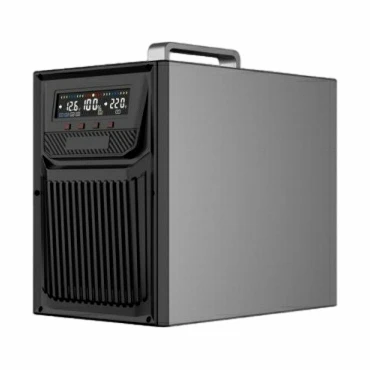
Ready to stop missing play sessions to power cuts or limited outlets? Let’s chat about what you need, and we’ll hook you up with the right unit for your gaming setup. No fluff, no hidden fees, just reliable power for your games.
UPS Backup Power Stations References
- U.S. Department of Energy. (2022). Portable Power Station Safety and Performance Guidelines.
- Consumer Reports. (2023). Testing Portable Power Stations for Consumer Electronics.
- Gaming Hardware Review. (2024). Power Consumption Analysis of Current-Gen Consoles and Peripherals.
- Lithium-ion Battery Association. (2023). Best Practices for Lithium-Ion Battery Usage and Lifespan.
Guangdong Joinwin Global Digital Intelligence Technology Co., Ltd.
As one of the most professional portable power stations manufacturers in China, we have world-leading production equipment and strong manufacturing capabilities. Please rest assured to buy high quality portable power stations from our factory. Customized orders are welcome.
Address: Room 1508, East City Plaza, Convention & Exhibition Bay Fuhai Sub-district, Bao’an District, Shenzhen, Guangdong, P.R. China
E-mail: bruceyang@joinwinenergy.com
WebSite: https://www.joinwinpower.com/
