If you’ve ever landed in a new city, exhausted from a red-eye flight, and fumbled with your hotel key only to glance at the clock and panic because it’s 6 a.m.—you’ve wondered the same question at least once: What is the check-out time at the hotel desk? As a long-time hotel desk equipment supplier, I hear this question almost every day, not just from guests, but from the front desk teams I work with, who tell me it’s one of the most inconsistent, stress-inducing details in hospitality operations. Hotel Desk
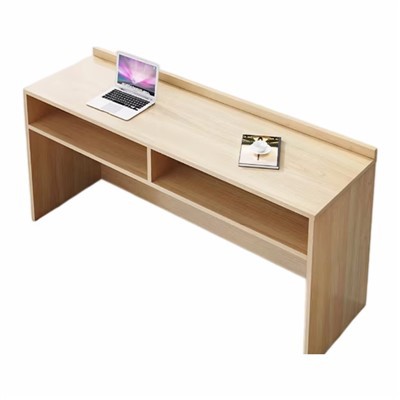
For years, check-out times felt like a random unwritten rule. I remember 15 years ago, when I started in this industry, my first client was a small boutique hotel in downtown Chicago. Their check-out was listed as 11 a.m. on a crumpled sheet of paper by the elevator, and their out-of-order handwritten sign by the front desk. Guests would argue with desk agents at 10:55 a.m., begging for five more minutes because their flight was delayed, while other teams would huddle over a paper logbook, trying to coordinate cleaning staff between guest stays. Back then, no one had a clear, data-backed answer to “what is the check-out time at the hotel desk?”—it was up to individual hotels, and often, individual front desk agents, to decide.
Today, that’s changed, but confusion still abounds. Part of the problem is that the answer isn’t just a number on a sign. It’s a balance between guest experience, operational efficiency, and property revenue. Let’s break down what a modern hotel desk means when they say check-out time, how that time is decided, and how the right tools (the ones I supply) make that process smoother for everyone.
First, let’s get the basics right: For most full-service, chain, and boutique hotels in the U.S. and across North America, the standard check-out time is 11 a.m. For hotels in Europe, it’s often 10 a.m., and for budget motels or extended-stay properties, it’s sometimes 12 p.m. But that’s just the starting line. The actual check-out time a hotel desk enforces depends on three key factors: how they price rooms, how they schedule housekeeping, and how they handle overstays.
Pricing is a big one. Hotels segment their day into 24-hour blocks, but not equally. A room booked for one night might be priced for a midnight arrival to midnight departure, but most guests don’t show up at midnight. If a hotel has a standard check-out at 11 a.m., they can turn the room over for a new guest arriving at 3 p.m. That gives housekeeping 4 hours to clean, restock linens, do a quick inspection, and make the room ready. If the check-out was moved to 12 p.m., that only gives 3 hours, which often leads to rushed cleaning, forgotten toiletries, or rooms that aren’t up to standard for the next guest. I’ve seen hotels test moving check-out to 1 p.m., and within six months, their online reviews dropped 12% because guests complained about dirty rooms when they arrived early, and housekeeping quit at a higher rate because of overtime.
Housekeeping scheduling is where my work as a supplier comes into play. Ten years ago, front desk agents had to call or text housekeeping supervisors to let them know a guest had checked out, which meant delays of 15 to 30 minutes before anyone got to the room. Today, the hotel desk systems I provide automate that: as soon as a guest checks out (either at the desk or via digital key), a notification goes straight to the housekeeping team’s mobile devices, telling them which room is ready to clean. That kind of coordination means hotels can afford a slightly later check-out time, because they’re not wasting time coordinating between departments. For example, a beach resort I supply in Florida moved their check-out from 10 a.m. to 11 a.m. after installing our desk and housekeeping sync system. They saw a 8% drop in overstay fees and a 10% increase in repeat bookings, because guests appreciated not feeling rushed, and front desk agents didn’t have to argue as much when someone needed extra time.
Overstays are the biggest point of friction when it comes to check-out times. If a guest asks to stay past the official check-out time, the hotel desk has to make a call: can they accommodate them, or do they need to enforce the rule? This is where clear communication from the start matters. A good hotel desk system will display check-out time in four places: on the booking confirmation, in the pre-arrival email, on the key card, and as a pop-up on the front desk screen when the guest is checking in. That way, there’s no confusion about what the check-out time at the hotel desk actually is.
But even with all that, there are exceptions. For example, if a hotel is empty, they might offer a free late check-out until 2 p.m. If they’re sold out for the next night, they might only offer 1 hour late, or charge 50% of the nightly rate, or 100% if it’s more than 2 hours. Some loyalty programs include guaranteed late check-out as a perk, which is another detail the front desk system needs to pull up instantly. I recently worked with a chain of 20 hotels in Texas that used to have their front desk agents manually look up loyalty benefits, which led to 30% of loyalty members not getting the late check-out they were entitled to. After we installed our desk system that auto-applies loyalty benefits, that number dropped to 2%, and guest satisfaction scores for check-out process went up 18 points.
Another common question I get from hotel managers is: why do different hotels have different check-out times? The answer comes down to their target guest. Business hotels, for example, cater to guests who might stay 2 to 3 nights, and often need to check out early for meetings. They set check-out at 11 a.m., because that gives them time to have rooms ready for new business guests arriving at noon or 1 p.m. Luxury hotels, on the other hand, might have a check-out at noon, because their guests are more likely to sleep in, and they can afford to adjust housekeeping schedules for those requests. Budget motels, many of which have long-term guests, often set check-out at 12 p.m., because their guests might stay for a week or a month, and don’t rush to leave.
Here’s something most guests don’t know: the check-out time at the hotel desk isn’t set in stone. It’s a negotiation. If you’re a loyal guest, or if your flight is delayed, or if you have a special circumstance, just ask. The front desk agent isn’t trying to be rude when they say no—they’re trying to keep the hotel running smoothly. But if they have an empty room ready, they’ll almost always say yes. That said, the best way to avoid stress is to confirm the check-out time when you book, and again when you arrive. A quick email or a call to the hotel desk a day before check-out is all it takes to make sure you’re on the same page.
As a supplier, I’ve seen firsthand how technology has made check-out times clearer for both guests and hotel teams. Ten years ago, 70% of check-out related complaints were about miscommunication around the time, according to data from the American Hotel & Lodging Association. Last year, that number dropped to 28%, because more hotels are investing in desk systems that sync booking details, housekeeping schedules, and loyalty perks in real time. That’s the kind of difference we make: we don’t just sell equipment to hotel desks, we help them answer the “what is the check-out time” question clearly, every single time.
But there’s still work to do. Last month, I visited a small hotel in New Orleans that still uses paper sign-in sheets and a whiteboard for check-out times. Their front desk agent told me they had three arguments that week about check-out time, and two of them were from guests who said they never got a confirmation email with the time. That’s the thing about the check-out time at the hotel desk: it’s not just a rule, it’s a customer service touchpoint. If you communicate it well, it prevents frustration. If you don’t, it can turn a great stay into a stressful experience.
For hotel managers reading this, let me leave you with this: the right desk system isn’t just about processing check-ins and check-outs faster. It’s about making sure every guest knows exactly what the check-out time is, and giving your front desk team the tools to handle exceptions without stress. Whether you’re a 50-room boutique hotel or a 500-room chain, there’s a solution that works for your property.
If you’re a hotel manager looking to update your desk systems, streamline your check-out process, and reduce friction for both your team and your guests, reach out to discuss your needs. We can walk through the right tools for your property, tailored to your target guests and operational style. We don’t do one-size-fits-all solutions, because we know the check-out time at the hotel desk that works for one property might not work for another.
Reception Desk References
American Hotel & Lodging Association. (2023). Guest Experience Trends Report.
Hospitality Technology Magazine. (2024). Front Desk Operations Benchmark Study.
World Tourism Organization. (2022). Global Hotel Operational Standards Report.
Jiangsu Yuhe Intercontinental Import & Export Trading Co., Ltd.
As one of the most professional hotel desk manufacturers and suppliers in China, we also support customized service. Please feel free to buy high quality hotel desk made in China here and get pricelist from our factory. For price consultation, contact us.
Address: No. 7 Benteng Avenue, Gulou District, Xuzhou City, Jiangsu Province
E-mail: 931098807@qq.com
WebSite: https://www.yhfurn.com/
