Hey there! I’m a supplier of Duct Protection Film, and today I wanna chat about what this stuff is made of. You know, duct protection film is super important in a bunch of industries, from construction to HVAC (Heating, Ventilation, and Air Conditioning). It helps protect ducts from scratches, dirt, and other kinds of damage during installation, transportation, and even long – term use. Duct Protection Film
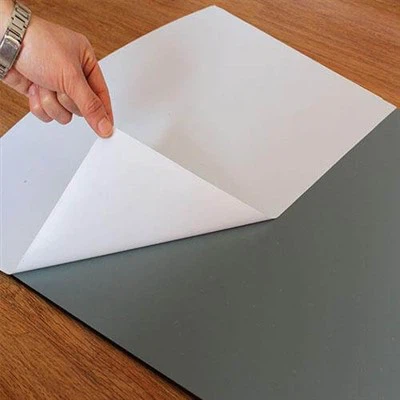
Let’s start with the most common materials used in making duct protection film.
Polyethylene
One of the go – to materials is polyethylene. It’s a type of plastic that’s widely used in the packaging industry, and it’s no wonder it’s also popular for duct protection film. Polyethylene comes in different forms, like low – density polyethylene (LDPE) and high – density polyethylene (HDPE).
LDPE is flexible and has a high degree of stretchability. This flexibility allows the duct protection film to be easily wrapped around ducts of various shapes and sizes. You can bend and twist it without it breaking or losing its integrity. It’s great for protecting ducts during the installation process because it can conform to the duct’s contours. For example, if you have a curved duct, LDPE film can be applied smoothly, providing a snug fit.
On the other hand, HDPE is more rigid and stronger. It has better resistance to impact and punctures. So, if your ducts are going to be exposed to rough handling during transportation or in a harsh construction environment, HDPE – based duct protection film is the way to go. It can withstand more abuse and still keep the ducts safe.
The manufacturing process of polyethylene – based duct protection film is relatively straightforward. First, the polyethylene resin is melted and then extruded through a die to form a thin film. After that, it can be rolled onto large spools for easy storage and distribution.
Polypropylene
Another material you might find in duct protection film is polypropylene. Polypropylene is known for its good chemical resistance. It can resist the effects of many chemicals, which means it can protect ducts from chemical spills or exposure to corrosive substances.
This material also has a relatively high melting point compared to polyethylene. So, in environments where there might be some heat, like near heating ducts, polypropylene – based duct protection film can maintain its shape and properties better.
Polypropylene film can be made through a similar extrusion process as polyethylene. But it has a different molecular structure, which gives it its unique properties. For example, polypropylene film can be made to be more transparent than polyethylene film in some cases. This transparency can be useful if you need to visually inspect the ducts while the protection film is still on.
PVC (Polyvinyl Chloride)
PVC is also used in making duct protection film, although it’s not as common as polyethylene and polypropylene in some applications. PVC is a very versatile material. It can be made to be soft and flexible or rigid, depending on the additives used during the manufacturing process.
Soft PVC – based duct protection film is often used when you need a film that can be easily applied and removed. It has good adhesion properties, which means it can stick to the ducts well without leaving behind any residues when removed. This is particularly important in clean installation environments.
Rigid PVC film, on the other hand, is useful for providing more structural support to the ducts. It can be used in applications where the ducts need to be protected from more than just surface damage. For example, in industrial settings where there might be mechanical stress on the ducts, rigid PVC film can add an extra layer of protection.
However, PVC does have some environmental concerns associated with it. The production and disposal of PVC can release harmful chemicals. But with the development of more environmentally friendly PVC formulations, the use of PVC in duct protection film is still viable in many cases.
Adhesive Materials
Now, the material of the film itself is just one part of the equation. The adhesive used on the duct protection film is also crucial.
Acrylic adhesives are very popular. They offer good adhesion to a variety of surfaces, including different types of duct materials like metal, plastic, and fiberglass. Acrylic adhesives are also resistant to moisture and temperature changes. So, whether it’s a humid or hot environment, the film will stay in place.
Rubber – based adhesives are another option. They are known for their strong initial adhesion. This means that the duct protection film can be quickly and securely attached to the ducts. However, rubber – based adhesives may not be as resistant to high temperatures as acrylic adhesives.
When choosing an adhesive for duct protection film, we need to consider the specific application. For example, if the ducts are going to be installed in a coastal area where there’s high humidity, an acrylic adhesive might be a better choice.
Coating Materials
In some cases, duct protection film may have a coating on it. These coatings can add extra functionality to the film.
One common coating is an anti – static coating. In environments where static electricity can be a problem, like in some electronics manufacturing plants or cleanrooms, an anti – static coating on the duct protection film can prevent the build – up of static charges. This helps to avoid attracting dust and other particles, which could contaminate the ducts.
There are also UV – resistant coatings. If the ducts are going to be exposed to sunlight for an extended period, a UV – resistant coating can prevent the film from deteriorating due to the sun’s ultraviolet rays. This ensures that the protection film remains effective for a longer time.
So, as you can see, the materials used to make duct protection film are diverse, and each has its own advantages. Depending on the specific needs of your project, like the type of ducts, the environment they’ll be in, and the level of protection required, you can choose the right duct protection film.

If you’re in the market for high – quality duct protection film, I’d love to have a chat with you. Whether you need polyethylene, polypropylene, PVC – based films, or different adhesive and coating options, we’ve got you covered. Feel free to reach out and let’s discuss your requirements. We can work together to find the perfect duct protection solution for your project.
Crash Wrap References
- "Plastics in Packaging: Technology and Innovation"
- "Handbook of Adhesives and Sealants"
- "Polymer Science and Technology"
Haining Huanan New Material Technology Co., Ltd.
Haining Huanan New Material Technology Co., Ltd. is one of the leading duct protection film manufacturers and suppliers in China for over 20 years. We warmly welcome you to wholesale high quality duct protection film made in China here from our factory. For more cheap products, contact us now.
Address: NO. 5 BEIZHUANG EAST ROAD, HAINING ECONOMIC DEVELOPMENT ZONE, HAINING,JIAXING, ZHEJIANG,CHINA
E-mail: fiona@zj-hnhn.com
WebSite: https://www.hnhnfilms.com/
