Hey everyone, let’s talk about something I get asked all the time as a thermal goggles supplier: can these things actually work for security? I know when most people think of thermal gear, they picture soldiers sneaking around in movies or hunters tracking deer at night. But lately, I’ve had so many security companies—small business owners building perimeter systems, event security teams, even residential property managers—reach out and ask if thermal goggles are worth the investment for their own safety. Spoiler: yeah, they absolutely can be, and I’m gonna break down why, how, and what to actually look for if you’re thinking of using them for security. Thermal Goggles
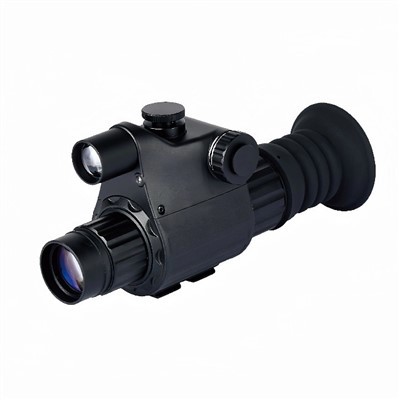
First, let’s get one basic fact out of the way, no jargon promise: thermal goggles don’t work like regular night-vision goggles. Night-vision picks up faint visible light or infrared (IR) from artificial sources like streetlights, but only if there’s something to reflect that light. Thermal? It detects the heat that every living thing and even man-made objects give off, 24/7, no matter how dark it is, and even through light fog, smoke, or tree cover. That’s a game-changer for security, because most threats don’t make noise or turn on lights when they’re casing a property.
Let’s take a quick real example: I had a customer last year who runs a small industrial warehouse on the edge of a rural town. They’d been having issues with people sneaking onto the loading docks after dark to steal inventory—regular motion lights only worked if someone tripped them, and half the time people would just duck behind a stack of pallets and wait till the lights turned off. He picked up a mid-range set of thermal goggles from our line, and his team started doing nightly patrols. Within a month, they caught three people who’d been hiding in the tree line 150 yards from the warehouse, completely invisible to regular lights. The goggles picked up their body heat through the thin fog that rolls in at night, and because thermal doesn’t care about no light, they didn’t have to turn on the warehouse’s bright floodlights (which can scare off good neighbors and even draw unwanted attention). That’s way more effective than security cameras that glitch when it’s foggy, right?
But wait, it’s not just perimeter patrols. Event security is another big one. Let’s say you’re coordinating a music festival or a corporate gala, and you’ve got thousands of people, plus restricted areas backstage or for VIPs. A lot of teams use regular cameras, but crowds can block line of sight. Thermal goggles let you spot a single person wandering into a VIP tent’s restricted zone from 200 feet away, even if there are 50 people in the way. I also heard of a college campus security team that used them last semester to find a student who’d gone for a late-night run and collapsed in a wooded area near the dorms—regular searchlights would have missed her, but her body heat showed up clear on the goggles, and they found her in 10 minutes instead of hours. That’s a life-saving security use, not just theft prevention.
Now, I don’t wanna make it sound like every thermal goggle is the same, because that’s a huge mistake a lot of people make. Cheaper, no-name sets you might see online for $100? Those are cool for camping or spotting animals, but they’re garbage for security. Here’s why: thermal resolution. The best security thermal goggles have at least 320×240 pixels—any lower, and you’ll get blurry images that can’t tell the difference between a dog and a person, or even a heat vent vs. a human. Our most popular set for security is 384×288, which is sharp enough to see if someone’s carrying a backpack (which would have its own heat signature, different from a person’s) or a laptop, without mixing it up with a parked car’s engine.
Another thing: detection range. For residential perimeter, 500 yards is enough, but for industrial sites or large outdoor events, you need 1,000 yards or more. A lot of cheaper sets advertise “long range” but that’s just for animal tracking, not for identifying a human’s features or actions at distance. Our security-specific models have adjustable zoom, too—so you can scan a wide area fast with low zoom, then zoom in on a heat signature to confirm it’s a person, not a stray animal or a garden hose left running. Oh, and battery life! Nothing’s worse than your goggles dying mid-patrol. Security sets should have at least 8 hours of use on a single charge, not 2 or 3. I’ve had customers come back telling me they grabbed a cheap set, only to have it die halfway through their 2-hour patrol, so they had to waste money replacing it.
Wait, but is there a downside? Yeah, no tool is perfect. Thermal goggles can’t see through solid objects—so if someone’s hiding inside a brick building, they won’t show up, same as any other heat detector. They also can’t tell you who someone is, right? If you catch a heat signature, you’ll see a person’s shape, but you can’t pick out their face unless you’re really close. That’s why a lot of security teams don’t use thermal goggles as their only tool—they pair them with regular night-vision cameras, motion sensors, and even a little bit of light, so they can ID someone once they’ve spotted a threat. It’s a complement, not a replacement.
I also wanna address a common myth: thermal goggles are only for outdoors. Wrong! I’ve got a lot of office building security managers who use them to check for unauthorized people in empty office floors after hours. You can even use them indoors to spot hot spots in your building’s HVAC system, but for security, the main use is being able to move around without lighting up every corner, which makes bad guys way less likely to notice you. Regular flashlights give away your position, right? Thermal goggles are silent and don’t emit any light, so you can sneak up on someone who’s sneaking around, no warning.
Another recent use case: private property that’s not just warehouses. I had a residential customer who lives on 10 acres out in the country, and he was having issues with people cutting through his fence to dump trash or leave things for unwanted guests. He got a pair of our compact thermal goggles for his nightly walks around the property line. He told me last month he caught two people dumping a couch behind his garage at 2 a.m.—they thought the dark and the trees would hide them, but the goggles picked up their body heat through the brush, and he was able to get a license plate number from his driveway camera once they left. That’s a small-scale security win that would’ve never happened with regular lights.
So, if you’re still on the fence about thermal goggles for security, here’s the takeaway: they solve a problem that regular tools can’t—seeing threats in complete darkness, through light obstacles, without giving away your own position. But you don’t wanna grab the first cheap set you see online. Look for one with at least 320×240 resolution, good battery life (8+ hours), and adjustable zoom. And remember, they work best when paired with your existing security setup, not as a solo solution.

Now, if you’re a security professional, property manager, small business owner, or just someone looking to boost your personal or business security, I’m here to help. We’ve been supplying thermal goggles to security teams of all sizes for years, and we can walk you through what set fits your exact needs—whether that’s a compact pair for residential perimeter, a heavy-duty model for industrial sites, or something for event security. No pushy sales talk, just straight answers about what works, what doesn’t, and why. If you’re ready to chat procurement and get the right gear for your security needs, just reach out.
Night Vision Scopes References:
- U.S. Department of Homeland Security. (2021). Thermal Imaging for Perimeter Security: Best Practices for Private and Commercial Properties.
- International Association of Venue Managers. (2022). Security Technology Guide: Integrating Thermal Imaging for Outdoor Event Safety.
- Journal of Physical Security. (2020). Comparative Analysis of Thermal vs. Night-Vision Systems for Low-Light Security Applications.
- National Institute of Justice. (2019). Use of Thermal Imaging by Local Law Enforcement: Benefits and Limitations for Patrol Operations.
Shenzhen Detyl Optoelectronics Co., Ltd.
With abundant experience, we are one of the most professional thermal goggles manufacturers and suppliers in China. Please rest assured to buy customized thermal goggles at competitive price from our factory. For pricelist and quotation, contact us now.
Address: 4th Floor, Building 3, Factory, No. 20, Second Industrial Avenue, Tangxiayong Community, Yanluo Street, Bao’an District, Shenzhen
E-mail: sales@detyl.com
WebSite: https://www.detyl.net/
