Hey there, let’s cut to the chase—if you’re a production line owner or manager looking to upgrade, tweak, or build a whole new line, I’ve been there. As someone who’s been supplying custom production lines for over a decade, I’ve seen so many folks skip key steps that end up costing them way more time, cash, and headaches later. Today, let’s talk about the actual, real-world factors you actually need to think through, not just the generic stuff some textbooks regurgitate. Production Line

First off, let’s start with the thing that keeps the lights on for you: output demand. I can’t tell you how many times a client comes to me saying “we need 500 units a day” but that number is made up. Wait—what’s your peak demand? Are you ramping up for a new product launch in 12 months? Or is that 500 units a day your steady baseline, and you might need to add an extra shift if you hit a holiday surge? Let’s say, for example, a snack company I worked with last year swore they only needed 300 packs of granola bars an hour. Turns out they were launching a limited-edition holiday pack that would push that number to 700. We had to rework the conveyor speeds and station spacing at the last minute, which ate up two weeks of their timeline and an extra $12k. That’s the kind of avoidable mess when you don’t tie your line design to actual, verifiable demand, not guesswork. Also, don’t forget about scalability—your line should be able to grow with you, not become obsolete in 2 years. We build in modular stations as standard now because no one wants to rip out half their line just to add a new machine.
Next up, product complexity. This is way bigger than just “is it small or big?” Let’s say you’re packaging a single water bottle? That line is straightforward—unload bottles, fill, cap, label, box. But if you’re assembling a medical device with 20 tiny parts that need precise alignment, or a baked good that has to go through multiple cooling stages and quality checks before packaging? That changes everything. I had a client who made custom electronic sensors—each one has 12 micro-components that need to be soldered, tested, and sealed, all without a single spec deviation. Their old line was a generic one-size-fits-all, and they were wasting 15% of parts because the line couldn’t handle the tiny tolerances. When we designed their new line, we had to add vision inspection stations at every step, slow down the workstations to let technicians handle tiny parts, and even add electrostatic discharge controls because those sensors get fried if you so much as touch them wrong. Generic lines don’t account for that kind of complexity. You have to map out every single step your product goes through, every part that has to be assembled, every test it needs—then build the line around that, not the other way around.
Then there’s workforce skill. So many suppliers (and I’ve seen this, even from big names) design lines that need a team of master technicians with 10 years of experience to run. But guess what? Most factories are struggling to hire entry-level workers these days. If your new line requires someone to program a PLC (programmable logic controller) with a master’s degree, you’re going to be waiting months to fill that role, or you’ll have to pay a premium salary that eats into your profits. I always ask clients: what’s the skill level of your current team? Can they be trained in a week to run a new station, or do you need to hire external specialists? One client who made furniture told me their workers were great at hands-on assembly but terrible with complex screens. So instead of adding a fully automated sanding and finishing station that needed a dedicated tech, we designed a semi-automated one—machines do the heavy lifting, workers just load/unload and check quality. That cut their training time from 4 weeks to 2 days, and they didn’t have to hire a new person. Don’t design your line for a team that doesn’t exist—design it for the people who will actually be running it every day.
Maintenance and downtime are the unsung heroes of line design. Let’s be real: every machine breaks. But if your line is built so that you have to shut down the whole entire production to fix one small part? That’s a disaster. A friend of mine runs a candle factory—they had a line where the wax-filling pump was buried in the middle of the line. To fix a clogged pump, they had to shut down the entire line for 2 hours, losing 400 units of production. When we redesigned their line last year, we moved the pump to a side aisle with quick-release covers, so a technician can swap it out in 15 minutes, no full shutdown. Also, think about spare parts—do the parts for your new line come from a supplier across the country, or do you keep a stock of common ones at your factory? We make sure all our lines have quick-access part cabinets right next to each station, and we send our clients a starter kit of the most common parts when we install the line. If you don’t plan for maintenance upfront, a 10-minute clog can turn into a 4-hour delay, which adds up to thousands of dollars in lost revenue every month.
Footprint and facility constraints. You can’t design a 50-foot-long line if your factory only has 30 feet of space. I can’t tell you how many times I get a client saying “we have this open spot by the loading dock” and we have to adjust the entire line to fit. It’s not just length and width—what about ceiling height for overhead conveyors? Power availability? Do you have enough 3-phase outlets, or do you need to upgrade your electrical panel? One small brewery client of mine thought they had enough space for a new bottling line, but they forgot their electrical panel was only rated for 100 amps, and the line needed 200. We had to rearrange their entire facility to move the panel, which added $18k to the project and delayed their launch by a month. Always measure twice, even the stuff that feels minor. Also, think about workflow—don’t put the packaging station at the other end of the factory from the shipping dock. That just creates extra material handling time. We do 3D scans of our clients’ facilities before we even draft a line design, so we don’t have to do last-minute hacks like running conveyors through walkways (trust me, that’s never a good look or a good practice).
Safety and compliance. This is non-negotiable, and not just because OSHA (or whatever your local safety agency is) will fine you. If your line isn’t safe, you’ll have workers getting hurt, which means lost time, workers’ comp claims, and bad morale. Different industries have different rules too—food manufacturing has FDA requirements for contact surfaces, medical devices have ISO standards, automotive has its own set of safety specs. I worked with a frozen pizza maker a few years ago who tried to save money by using stainless steel that wasn’t rated for food contact. They got a $50k fine and had to shut down production for a week to redo all the parts. We build all our lines to meet the latest safety standards, and we make sure all materials are compliant for the client’s specific industry. Also, think about ergonomics—are your workers going to be bending over all day to load parts, or reaching above their heads? That leads to repetitive stress injuries, which are costly. We design workstations at a height that’s comfortable for most people, with easy access to tools and parts. It’s not just a box to check; it’s keeping your team safe and your production running smoothly.
Wait, let’s not forget cost clarity. A lot of suppliers will give you a low upfront quote then add hidden fees for installation, training, spare parts, or adjustments. When I talk to clients, I give them a full, transparent quote that includes everything—no “surprise” charges. Because I know what it’s like to budget for a new line, and you don’t want to end up paying 20% more than you expected. Also, don’t just go for the cheapest quote. A line that’s $100k but requires 10 hours of downtime a month is way worse than a line that’s $120k and has 2 hours of downtime a month. I always run the numbers with my clients—show them the total cost of ownership over 5 years, not just the initial price. That’s the stuff that actually matters for your bottom line.
Let me wrap this up. When you’re designing a production line, it’s not just about putting machines in a straight line. It’s about matching the line to how much you actually need to make, how complex your product is, who’s going to run it, how easy it is to fix, how well it fits your space, if it keeps everyone safe, and if it makes financial sense long-term. I’ve been doing this for long enough to know that cutting corners on any of these factors leads to problems down the road—problems that cost way more than taking the time to get it right upfront.
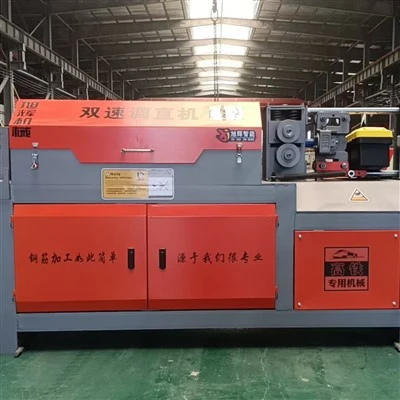
If you’re in the market for a new production line, or you’re reworking your existing one, I’m here to help. I’ve worked with everything from small local factories to mid-sized facilities, and I can walk you through every step, no jargon, no hidden fees. Shoot me a message, and we can chat about what your specific needs are. Let’s build a line that works for you, not against you.
Hydraulic Shearing Machine References:
- Smith, J. (2021). Practical Production Line Design for Modern Manufacturing. Industrial Press Inc.
- OSHA. (2022). Guidelines for Manufacturing Workstation Safety and Ergonomics. U.S. Department of Labor.
- ISO 13485:2016. (2016). Medical Devices – Quality Management Systems – Requirements for Regulatory Purposes. International Organization for Standardization.
- Food and Drug Administration (FDA). (2020). Food Contact Materials: Safety Requirements for Manufacturing Facilities. U.S. Food and Drug Administration.
Xuhui (Shandong) Intelligent Equipment Co., Ltd.
Xuhui (Shandong) Intelligent Equipment Co., Ltd. is one of the most professional production line manufacturers and suppliers in China. Please feel free to wholesale high quality machines made in China here and get quotation from our factory. Contact us for customized service.
Address: Industrial Park, Hetaoyuan Town, Juye County, Heze City, Shandong Province, China.
E-mail: yue@xuhuijx.com
WebSite: https://www.xuhuiintelligent.com/
