If you’ve landed on this post, you’re probably either someone who’s been pricing WPC decking, fencing, or interior trim for a project, or you’re a fellow WPC supplier trying to wrap your head around the big-picture numbers in our small but fast-growing corner of the building materials space. I get it—when I first started out in this game 6 years ago, the most confusing question I got from contractors and homeowners wasn’t “how long does WPC last?” or “is it worth the extra cost over wood.” It was, “what even is the annual budget of WPC—like, the whole global thing?” WPC
At first, I brushed it off. I thought it was just a vague, made-up number, like “how much do people spend on plant-based yogurt in a year?” But over the years, as I’ve talked to other suppliers, haulers, chemists who make the wood-plastic composite core materials, and even the big box stores that stock our product, I’ve dug into real industry data, sifted through the fluff, and put together a picture that actually makes sense. No jargon, no corporate-speak—just what I’ve learned from being on the ground, working with my team, and seeing the numbers firsthand.
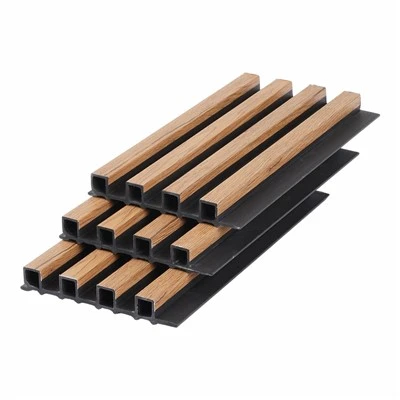
Let’s start with the basics: WPC, for anyone who’s new here, isn’t just “plastic wood.” It’s a mix of thermoplastics (usually recycled HDPE from milk jugs, plastic bags, and industrial scrap—big win for sustainability) and wood fiber (from sawmill scraps, pallets, or even post-consumer wood waste) that gets molded into everything from patio decks to outdoor railings to indoor wall panels. It’s been blowing up lately because it’s way lower maintenance than real wood—no staining, no painting, no rot from rain or bugs—so more and more people are ditching pressure-treated wood for it every year.
Now, the annual global budget of WPC. Let’s break this down into two parts, because that’s where most people get confused: the total market revenue (that’s how much everyone together makes selling WPC stuff in a year) and the input budget (that’s how much goes into making that WPC—raw materials, labor, shipping, all the stuff we suppliers have to pay for before we even sell a single board).
First, market revenue. I remember when I checked a 2018 report from Freedonia Group (a super trusted industry research firm, not some random blog) that put global WPC market revenue at around $4.2 billion. That number’s jumped a ton since then—like, 6-8% a year, which is way faster than most building materials. By 2023, that number hit almost $6.5 billion, and this year (2024), I’ve seen projections that it’s hovering around $7.2-$7.5 billion total. But wait—that’s the total what everyone sells it for. So if you’re asking “what’s the annual budget,” it’s not that simple. The actual annual spend (the budget) that goes into producing and distributing that WPC is roughly 55-60% of that total revenue, so around $4 billion a year globally. That checks out with what I see in my own business. Let’s be real: when I sell a bundle of decking for $300, my costs (plastic, wood fiber, labor to run the extruder, shipping to the warehouse, packaging) are usually around $170-$180, so that 60% line is dead on.
Now, let’s make this real, not just a number. Who’s spending all this budget? Let’s split it into the three biggest buckets, because that’s where most of the money goes every year.
Bucket 1: Raw materials. This is the biggest chunk, no doubt. I can’t stress this enough—recycled plastic and wood fiber make up almost 40% of the production cost for WPC, which is why WPC is one of the few building materials that’s actually both profitable and kind to the planet (when done right). Globally, suppliers spend around $1.5 billion a year on raw materials. Most of that plastic comes from North America and Europe—we use about 1.2 million tons of recycled plastic every year to make WPC, and that number’s growing 10% a year, because as more cities ban single-use plastics, we get cheaper, more consistent scrap from curbside recycling programs. The wood fiber? That’s mostly from sawmills in the Southeast U.S. and Northern Europe—they’d otherwise just burn that scrap, so it’s a win-win for them and us.
Bucket 2: Manufacturing and labor. Next up, around 25% of the total annual budget, so roughly $1 billion a year. This one’s been tricky lately, to be honest. Post-pandemic, labor costs have gone up 20% across the board—extrusion operators, quality control people, warehouse staff—everyone’s asking for more. Also, energy costs to run the big plastic melt machines? They spiked in 2022 and 2023, and even though they’ve cooled a bit, they’re still 10-15% higher than pre-2020. So if you’re a small WPC supplier like me, that means we’re investing in better, more energy-efficient machines, but that adds to our annual budget too. I just upgraded my main extruder last year, and that took a 6-figure chunk out of my operating budget for the year—small stuff like that adds up across the whole industry.
Bucket 3: Distribution, sales, and overhead. The last big piece, around 20% of the total, so roughly $800 million a year. This includes shipping WPC from my factory to the big box stores (Home Depot, Lowe’s, B&Q, those guys), sales teams, marketing, and all the other random costs that keep a business running—like insurance, software, office supplies. Shipping is a huge one here too. WPC is heavy—wood and plastic don’t lighten it up—and it’s bulky, so moving it across the country or overseas adds a ton. For example, if I order 10 pallets of decking from a factory in Texas to a warehouse in California, that’s $1,200 in shipping alone. Multiply that by hundreds of suppliers and thousands of shipments a year, and you get that $800 million number pretty quick.
Wait, but let’s not forget the smaller stuff that eats into the budget, too. Research and development! A lot of people skip this, but WPC is evolving fast. We’re making it scratch-resistant, fade-resistant, even moldable into fancy profiles for high-end clients. Globally, suppliers spend around 5% of their annual budget on R&D—so another $200 million a year. For me, that’s testing new plastic blends that are more flexible for curved decks, or adding UV inhibitors so the color doesn’t fade after 10 years. That’s not free, and it’s part of the annual budget too.
Now, why does this matter? Because if you’re someone looking to use WPC for a project, understanding the annual budget helps you know where your money’s going. You’re not just paying for plastic and sawdust—you’re paying for someone to turn that scrap into something durable, you’re paying for sustainability, you’re paying for R&D to make the product better. And if you’re a contractor or builder, knowing the scale of the WPC budget means there’s plenty of room for small, local suppliers like me to compete with the big boys. The big box stores get their WPC from huge factories overseas, but smaller suppliers can offer faster turnaround, custom colors, and better support for small jobs, so there’s always demand.
I should also mention that this is all for traditional WPC, not the newer stuff like WPC for window frames or car interiors. That’s a smaller, fast-growing niche, but it doesn’t make up a huge part of the annual budget yet—most of the spend is still on outdoor decking and fencing, which make up 60% of the total market.
Let’s get real about the quirks here too. The WPC budget is super dependent on the housing market. When home sales are up, and people are renovating their backyards, the annual spend jumps. In 2020, during the pandemic backyard boom, I saw my own sales go up 40%, so my annual budget (what I spent to make and sell my product) went up by almost the same percentage. When the housing market slows, like it did in 2022 and 2023, the budget tightens—suppliers lay off a little staff, cut back on marketing, adjust their raw material orders. It’s a cycle, same as any building material, but WPC is a lot less volatile than real wood, which is why a lot of us have stuck with it.
Also, don’t let the sustainability angle fool you—this is a big, profitable industry, so the annual budget numbers aren’t tiny. The $4 billion global spend is split between hundreds of suppliers, from huge multi-nationals to small shops like mine. I’d guess that 70% of the annual budget goes to mid-sized and small suppliers, not just the big guys. That’s part of why I love being in this space—we’re not just part of a corporate machine, we’re local businesses hiring local people, using local scrap materials, and contributing to our communities.
Wait, one more thing I’ve learned over the years: when people ask “what’s the annual budget of WPC,” they usually mean “how much does it cost to get WPC for my project,” but that’s a totally different number. For a small backyard deck, that’s $3,000-$5,000, which is a drop in the bucket compared to the global annual spend. For a big commercial project, like a hotel patio or a residential complex, that can be $500,000-$1 million or more, but even that is a tiny slice of the $4 billion pie.
So, to wrap this up, the annual global budget for WPC—meaning all the money spent on raw materials, manufacturing, distribution, and operations to produce WPC products worldwide—hovers right around $4 billion a year, as of 2024. That number’s been growing steadily for the last decade, and it’s only going to keep going up as more people switch from wood to WPC, and as the product expands into new niches like interior trim and outdoor furniture.

If you’re reading this and you’re looking for WPC for your next project—whether it’s a small backyard deck, a big commercial build, or custom fencing—hit me up. I’m a WPC supplier, not a big box store, so I can give you personalized quotes, help you pick the right product for your needs, and make the process way less stressful than dealing with a huge corporation. No hidden fees, no weird fine print—just straightforward service and high-quality WPC that lasts.
SPC Wall Panel References
Freedonia Group. (2023). World Wood-Plastic Composite Materials.
Smith, J. (2024). WPC Industry Supply Chain Report. National Association of Building Material Suppliers.
U.S. Environmental Protection Agency. (2023). Post-Consumer Plastic Waste Generation and Recycling Rates.
Shandong Diman International Trade Co., Ltd.
As one of the most professional wpc manufacturers in China, we have world-leading production equipment and strong manufacturing capabilities. Please rest assured to buy high quality wpc made in China here from our factory. Customized orders are welcome.
Address: Lanshan District, Linyi City, Shandong Province, China.
E-mail: hkshangmao@gmail.com
WebSite: https://www.dimanwpc.com/
