When I first started out as a commodity making machine supplier, I spent months on the road visiting small factories, food processing plants, and craft workshops across the Midwest. One conversation stuck with me like no other: a line operator at a mid-sized snack food plant told me, “We thought all the big machines were made to shake loose parts.” That’s when I realized how little most producers understand about vibration levels on commodity making equipment—and how that ignorance leads to breakdowns, wasted materials, and way too many emergency service calls. Vibration isn’t just a nuance in machine design—it’s a metric that tells you everything from how long your line will run to how much you’ll spend on repairs. Today, I want to break down what those vibration levels actually mean for anyone running or buying commodity making machines, and why that matters for your bottom line. Commodity Making Machine
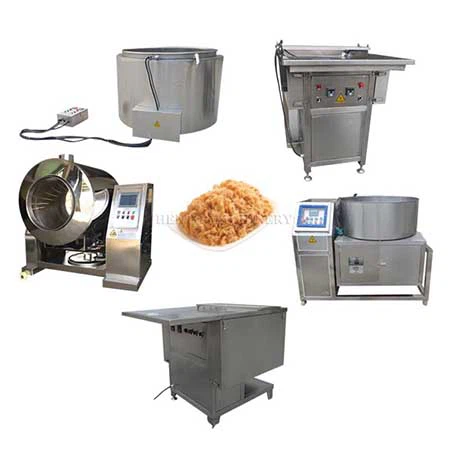
First, let’s define what we’re even talking about when we say “vibration levels” for commodity making machines. Unlike high-precision lab equipment or aerospace machinery, commodity making machines are built to turn raw materials—grains, plastics, textiles, simple metal stock—into consistent, saleable products at high volumes. They rely on continuous motion: mixing, forming, cutting, shaping, and packaging all happen at speeds that can top hundreds of units per minute. That motion, if not controlled, creates harmonic vibration: the constant back-and-forth shift of machine components that ripples through the frame, drives, and product stream.
Vibration is measured two main ways in industrial settings today: velocity, usually expressed in millimeters per second (mm/s) or inches per second (ips), and displacement, measured in micrometers (µm) or thousandths of an inch. Most maintenance teams and engineers use velocity as the go-to metric because it correlates directly with wear and tear on bearings, shafts, and gears—parts that fail when vibration exceeds their design limits. For commodity making machines, which run 12+ hours a day, 5 or 6 days a week, that consistency of vibration level isn’t just a performance check—it’s a reliability check.
The range of vibration levels we see on commodity making machines is way wider than most new customers expect. Let’s start with baseline levels for a properly tuned, brand new commodity making line, running at design speed and under full load. For smaller, slower machines—think a simple pasta extruder or a low-speed plastic pelletizer running at less than 200 units per minute—you’ll see vibration levels between 0.5 mm/s and 1.5 mm/s on the main frame and drive shaft. That’s the “ghost” vibration you feel when you put your hand on the machine: a tiny, steady hum, not a noticeable shake. For these machines, levels below 2 mm/s are considered optimal for long-term operation; anything higher usually means a minor misalignment or a small imbalance in the forming roll.
Now, move up to mid-range commodity making machines: a mid-speed potato chip line, a textile weaving machine, or a high-speed metal stamping press running at 200 to 800 units per minute. Here, baseline vibration levels are a bit higher, usually between 1.2 mm/s and 3 mm/s. The added speed means more force on components, so some increased vibration is unavoidable—but it needs to be consistent. I learned this the hard way two years ago: we delivered a high-speed cookie forming line to a customer, and after their first week of running it, they called us panicking because their maintenance team said vibration was 4 mm/s on the feed hopper. We sent a service tech out first thing, and it turned out the customer had added a custom hopper made of thicker metal than we specified, without adjusting the feed’s counterbalance. Once we re-calibrated the counterweights, the vibration dropped back to 2.7 mm/s, and they haven’t had a hopper-related breakdown since. That’s the thing about mid-range machines: small changes to components can push vibration levels out of their safe zone, even if they seem like minor tweaks.
For the highest-speed commodity making equipment—think 1,000+ units per minute candy wrappers, precision plastic injection molding lines, or high-speed paper cup forming machines—baseline vibration levels naturally go up, ranging from 2.5 mm/s to 5 mm/s under full, steady load. These machines are engineered for minimal harmonic shift, though; any peak vibration above 5 mm/s is a red flag, not just a recommendation. Last year, I worked with a candy manufacturer that had a wraparound lollipop line running at 1,200 units per minute. Their vibration levels were hitting 6.8 mm/s on the cutting station, and every month, they had to replace the cutting blade housing. Our team ran a full vibration analysis and found the issue was a worn drive belt that was slipping unevenly at high speed. Replacing the belt and adjusting the tension brought vibration down to 3.9 mm/s, and their blade replacement costs dropped by 70% that quarter. That’s a perfect example of how tracking vibration levels isn’t just for big inspections—it’s for catching small issues before they turn into thousands of dollars in downtime.
Here’s where most customers get confused: there’s no one-size-fits-all “good” vibration level for commodity making machines, because every line has different operating conditions. A machine running at 2 a.m. with only half a load of raw material will have different vibration than one running at full capacity during a day shift, when temperature fluctuations and material density can shift. That’s why at our company, we include a baseline vibration study with every machine we sell, and we train our customers’ maintenance teams to track those levels over time—not just during installation.
Let’s talk about what happens when vibration levels go above the safe range. I’ve seen machines with vibration as high as 15 mm/s running, but not for long. At that level, you’ll notice not just the hum, but a visible shake in the machine frame, loose bolts working their way out, and even vibration traveling to the floor or nearby equipment. For commodity machines, this leads to three big problems: first, premature wear on bearings and gears. Bearings that should last 5 to 7 years might fail in 18 months if vibration is consistently 8 mm/s or higher. Second, product quality issues. Excess vibration on a forming line can lead to uneven cuts, misaligned packaging, or product defects that get rejected at the quality control station. One of our packaging line customers told us that before they started tracking vibration, their product reject rate was 4.2%—they traced it to vibration from a faulty conveyor drive that was causing misaligned packaging, and after fixing it, their reject rate dropped to 0.8%. Third, safety risks. Loose panels or components from high vibration can become projectiles, and the machine’s frame can develop cracks that lead to catastrophic failure. We’ve had to rush replacement parts to three customers in the last three years whose machines developed frame cracks from unaddressed high vibration—all of those could have been caught with simple monthly vibration checks.
Now, let’s get into what goes into designing these vibration levels. It’s not just guesswork; every commodity making machine we build starts with a load and speed analysis. We use 3D modeling software to simulate how forces will ripple through the frame at different operating speeds, then adjust things like counterbalance weights, drive shaft alignment, frame thickness, and bearing types to keep vibration within the target range for that machine’s speed and purpose. For example, a pasta extruder for industrial production has a thick, welded steel frame and oversized bearings to keep vibration low enough to avoid damaging the dough’s gluten structure—too much vibration would break down the gluten, leading to mushy, inconsistent pasta. On the other hand, a metal stamping press for small parts needs enough controlled vibration to create a clean cut, which is why its baseline vibration is a bit higher than a pasta machine.
I also want to address a common myth I hear all the time: “More expensive machines have lower vibration levels.” That’s only partially true. A commercial-grade commodity making machine built for 24/7 operation will have stricter vibration limits than a small, entry-level machine made for occasional use by a craft bakery. But you don’t have to buy a $100,000 line to get consistent, low vibration. We recently supplied a small craft granola manufacturer with a mid-range granola bar forming line for less than half the cost of a comparable high-end line, and we calibrated the vibration to 2.8 mm/s under full load—lower than many entry-level lines we’ve sold in the past. The key is working with a supplier who understands that vibration is adjustable, not a fixed number printed on a spec sheet.
So, what should you do if you’re a producer running commodity making machines, or looking to buy new ones? First, start with a baseline vibration reading for every machine you have. Use a portable vibration analyzer (you can get these for a few thousand dollars, or most maintenance technicians can rent them) to take readings on the main drive shaft, forming station, and frame at full, steady load. Write those numbers down—they’re your benchmark. Second, track those readings monthly. A 0.5 mm/s increase over three months might not sound like much, but it could signal a worn belt, misalignment, or a bearing starting to fail. Third, when you’re shopping for a new machine, don’t just look at speed and capacity specs—ask your supplier for their target baseline vibration level, and ask them to explain how they calibrated it for your specific application. At our company, we don’t just hand over a spec sheet; we walk customers through our vibration analysis process, and we offer on-site calibration after installation to make sure the levels match their operating conditions, not just our lab test conditions.
I’ve been in this business for 12 years, and the biggest difference I’ve seen between successful producers and those always dealing with breakdowns is how they approach machine vibration. It’s not a technical jargon term—it’s a tool that saves you time, money, and stress. A client of ours that makes frozen pizza bases used to have 10 to 15 hours of downtime a month from their forming lines, and maintenance costs over $200,000 a year. After we helped them set up a monthly vibration tracking schedule, and adjusted their line calibrations to keep levels within their target range, their downtime dropped to less than 2 hours a month, and maintenance costs fell by 65%. That’s not because we sold them a fancy machine—it’s because we taught them to listen to the small, steady hum of their equipment, and use vibration to keep it running well.
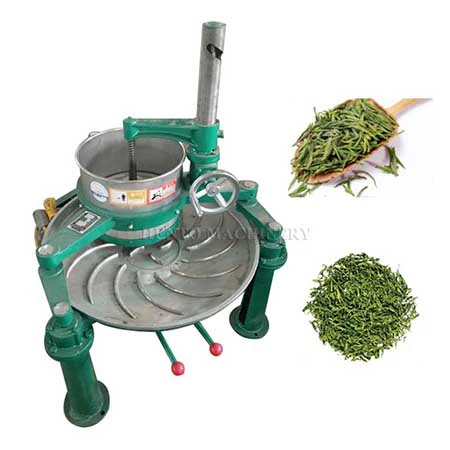
If you’re tired of unexpected machine breakdowns, high repair costs, or inconsistent product quality caused by unregulated vibration, I’d be happy to walk you through our machine calibration and vibration assessment process. We work with producers of all sizes, from small craft operations to large multi-line facilities, and we don’t believe in one-size-fits-all solutions for commodity making. Reach out to our team to discuss your specific operation, and we can share tailored recommendations for machines calibrated to keep your vibration levels where they need to be for reliable, high-volume production.
Packing Machinery References
- American Society of Mechanical Engineers (ASME). Vibration Measurement and Analysis for Industrial Machinery. ASME Press, 2021.
- Machinery Lubrication Magazine. “Understanding Vibration Levels in Industrial Processing Equipment.” National Lubricating Grease Institute, vol. 18, no. 3, 2020, pp. 22-27.
- Groover, Mikell P. Automation, Production Systems, and Computer-Integrated Manufacturing. 4th ed., Pearson, 2019.
Zhengzhou Hento Machinery Co., Ltd.
Zhengzhou Hento Machinery Co., Ltd. is one of the leading commodity making machine manufacturers and suppliers in China. We warmly welcome you to buy cheap commodity making machine from our factory. All customized products are with high quality and competitive price.
Address: No. 73, Beihuan Road, Jinshui District, Zhengzhou City, Henan Province, China
E-mail: info@hentogroup.com
WebSite: https://www.hentofoodmachine.com/
