If you’re running a processing plant that uses a PE grinding mill, I get it—efficiency makes or cuts your bottom line. I’ve been in the PE grinding mill game for over a decade now, talking to plant managers every single week who’re pulling their hair over why their machines are grinding too slow, wasting energy, or spitting out uneven material. Let’s cut the jargon and get real: improving your mill’s efficiency isn’t just about buying new parts—it’s about tweaking stuff you might already be overlooking, right alongside the right upgrades. PE Grinding Mill

First, let’s start with the basics you probably skip because “it’s always been this way.” I’ve seen way too many guys run their mills with way too much or way too little feed material. A lot of plant operators dump as much stone as they can into the hopper to keep the mill running nonstop… that’s a mistake. PE grinding mills (that’s the jaw crusher folks sometimes mix up, wait no—wait, PE series are actually primary jaw crushers, but sometimes people call them grinding mills loosely when they’re fine crushing hard stone) wait, no, let’s clarify quick: the PE line here is your standard primary/secondary jaw crusher, which is often used for grinding down raw material for concrete, aggregate, even mineral ores. So feed rate is non-negotiable. If the feed’s too high, the crusher gets choked—stones pile up in the crushing chamber, the motor strains, you get uneven output, and you’re just wasting power. Too low, and the chamber’s only half full, so the jaws aren’t hitting material at full force, and you’re still burning electricity for nothing. Pro tip I tell all my clients: use a vibration feeder with a variable speed controller. That lets you adjust feed rate to match the crusher’s capacity in real time, not on some old timer’s “set it and forget it” rule. I recently had a customer who was running his PE400x600 mill at 30 tons an hour max, just by cranking feed up properly and fixing the feeder—he jumped to 42 tons an hour within a week, no new parts, no overtime. That’s the kind of win we care about.
Next up, the crushing chamber setup. Let’s be real: a lot of mills run with worn jaw plates that have lost their profile. Those manganese steel plates are tough, but they don’t last forever—usually 12,000 to 15,000 operating hours if you’re running hard stone, less if it’s abrasive stuff like granite. When the teeth on the jaws wear down, they can’t grip the material properly, so stones just slip around instead of getting crushed, and you end up with oversized pieces that have to go back through the mill, doubling work. I always tell people to check their jaw plates every 1,000 operating hours, and replace them before the profile gets too smooth. Wait, and another thing: don’t mix old and new jaw plates. I’ve seen that cause so much uneven pressure—one sharp edge next to a worn edge makes the crusher vibrate way more, which not only kills efficiency but also wears out bearings faster. If you do replace plates, get a matching set, and make sure they’re torqued to the spec we ship with. Too loose, and they’ll shift; too tight, and you’ll warp the seat. That small torque tweak saved a customer in Texas from replacing a $1,200 bearing last quarter.
Then there’s the motor and power setup. A lot of folks just plug the mill into whatever circuit is available, but underpowered motors or mismatched voltage are huge efficiency killers. Your PE grinding mill is rated for a specific motor HP—run it with a 10% underpowered motor, and it’ll draw 20% more electricity just to keep up, because it’s straining nonstop. Conversely, a motor that’s way too big is wasting power too—no load is inefficient, right? I get that some people think bigger is better, but it’s not. Match the motor exactly to your mill’s capacity. Also, check for loose connections or voltage drops at the site. I had a client in the Midwest who was complaining about 15% lower output than advertised, turned out his circuit was dropping 8 volts when the mill turned on—fixed the wiring, and boom, output jumped back up. It’s the tiny, dumb stuff that trips you up, not the big shiny upgrades.
Now, if you’ve fixed the basics and still need a boost, there are targeted upgrades that don’t cost a fortune, unlike a whole new mill. Let’s talk about the flywheel and eccentric shaft. Those are the parts that transfer power from the motor to the crushing jaws. Worn eccentric bearings or unbalanced flywheels make the mill vibrate, which uses up energy that should go to crushing material. Balancing the flywheel might sound fancy, but it’s something we can help you with—most of our customers just send us a quick video of the flywheel, and we give them a balance kit for under $150. And if your eccentric shaft has any play, replace the bearings sooner rather than later—play means power is wasted shaking the shaft instead of crushing stone.
Wait, let’s not forget about the material’s moisture content. If you’re crushing wet stone, especially like wet limestone or clay, that stuff sticks to the jaw plates and lines the crushing chamber. Pretty soon, you’re grinding a mix of stone and sludge, which makes the crusher work way harder, and you’re getting way more undersized output that’s not usable. I tell clients to stock up on air knives or a simple drying line if they’re working with overly wet material—even just letting the raw material sit in a covered pile for a day to dry off cuts down on chamber buildup. One of my regulars who crushes construction waste switched from dumping wet debris straight into the hopper to letting it air dry, and his mill’s efficiency went up 18% in a month. That’s not a big investment, just a little planning.
Oh, and operator training! I can’t stress this enough. So many plant guys are running mills because they’ve been around equipment for 20 years, but they don’t know the ins and outs of their specific PE model. Last month, we sent a tech to a site where the operator was closing the discharge gap way too tight—so the mill was cramming material through a gap it wasn’t built for, burning motor power and breaking jaw plates. A 10-minute walkthrough showing how to adjust the discharge gate properly (not too tight, not too loose) fixed everything. We do free quick training calls for all our clients, because a good operator is worth more than any new machine part.
Now, if you’re looking for a bigger efficiency push without replacing your entire mill, what are the real upgrades that make sense? Let’s see: upgrading to a high-torque motor if you’re running hard, abrasive stone like basalt—those motors transfer power way better than standard ones, so you’re not wasting energy on torque loss. Or adding a hydraulic adjustment system for the discharge gap—instead of manually turning bolts every time you need to adjust, hydraulic lets you tweak the gap in 30 seconds, no tools, so you can adjust on the fly for different material types. I’ve seen that cut setup time by 70% for customers who switch, which means more grinding time, less downtime.
Wait, let’s address a common myth: a lot of people think buying a newer PE mill will automatically fix efficiency issues. No, not if you’re running it wrong. I had a guy who bought a brand new PE600x900 last year, and was only getting 50 tons an hour instead of the rated 80. Turned out he was feeding it oversized material, had worn jaw plates, and his feeder was way too slow. We walked him through the steps I mentioned earlier, and he hit 78 tons an hour within two weeks, no new mill needed. That’s the thing with our PE grinding mills—they’re built to be adaptable, so you don’t have to overspend to get them working right.
Now, let’s talk about downtime. Downtime is the biggest efficiency killer, period. Every hour your mill’s not running, you’re losing money. So doing preventive maintenance instead of reactive fixes is non-negotiable. I tell all my clients to stick to a schedule: check jaw plates every 1,000 hours, inspect bearings every 2,000 hours, tighten all bolts every 500 hours. We send out free maintenance checklists to anyone who buys a mill from us, but even if you didn’t get your mill from us, we can send you a custom one for your model. Last year, a client skipped a bearing check, and the bearing seized mid-shift—cost him 12 hours of downtime, plus $2,000 in replacement parts. If he’d just done the check, he would’ve caught the play in the bearing and replaced it for $300 before it failed. That’s a no-brainer.
Wait, also, the discharge system. A lot of mills have a clogged discharge chute, right? Oversized material or buildup at the end means crushed material can’t escape, so it gets recycled back through the mill, over and over. That’s called recirculation load, and a high recirculation rate (over 20%) kills efficiency because you’re grinding the same material multiple times instead of new feed. I had a customer with a recirculation rate of 35%—we added a simple screen after the discharge chute to separate oversized material and send it back only if needed, and cut his recirculation down to 12%, boosting his output by 15%. It’s a small add-on, but it makes a huge difference.
Let’s wrap this up with something real: I work with a lot of small to mid-sized aggregate companies, not just big corporations, and I know you can’t drop $100k on a new mill every other year. All the stuff I talked about today—feeding right, replacing jaw plates on time, checking wiring, training your operator—adds up to way more gain than any fancy upgrade. But if you do need a mill that’s built for efficiency, our PE line is designed with all these tweaks in mind, from variable feed compatibility to easy jaw plate access.
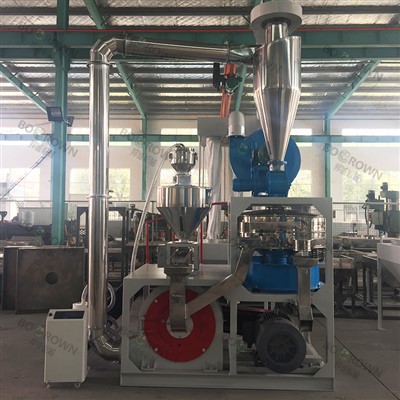
If you’re tired of your PE grinding mill underperforming, if your energy bills are too high, or if you’re not hitting your production targets, let’s chat. I don’t do sales pitches that are full of fluff—we can walk through what’s going on with your current setup, point out small fixes you might have missed, or talk about what upgrade would make sense for your operation, no pressure. Just reach out to get the conversation started.
Central Dust Removal References
- Mining and Ore Processing Equipment Efficiency Guidelines, International Council on Mining and Metals, 2022
- Jaw Crusher Performance Optimization, American Society of Mechanical Engineers, 2021
- Industrial Motor Efficiency Best Practices, U.S. Department of Energy, Office of Energy Efficiency and Renewable Energy, 2023
- Maintenance Protocols for Crushing Equipment, National Stone, Sand & Gravel Association, 2022
ZJG BC Machinery Co., Ltd.
As one of the most professional pe grinding mill manufacturers and suppliers in China, we’re featured by quality products and good price. Please rest assured to buy cost-efficient pe grinding mill for sale here from our factory. Contact us for custom service and OEM service.
Address: No.8 Lexi Road, Leyu Town, Zhangjiagang City
E-mail: sales@bcextruder.com
WebSite: https://www.bcextruder.com/
